
 Contact us


Product details
AI Security solutions are becoming an urgent requirement for enterprises applying GenAI, LLM, and AI Agent in operations. When AI is deeply integrated into systems, enterprises not only need to effectively exploit new technology. Enterprises must also control risks such as prompt injection, data leakage, agent hijacking, and output manipulation.
Radware's AI Security solution helps enterprises protect AI systems against emerging threats. The solution focuses on two main groups: Radware LLM Firewall to protect LLM at the prompt layer and Radware Agentic AI Protection to protect the automated AI Agent ecosystem.
With real-time monitoring, detection, control and policy enforcement capabilities, Radware helps enterprises exploit AI more securely. This is a suitable approach for organizations using GenAI, LLM, Copilot, ChatGPT Enterprise, AWS Bedrock, Azure AI Foundry, Google Vertex AI or self-developed AI Agents.
What is AI Security Solution?
AI Security solutions are solutions that help protect artificial intelligence systems from the risk of being attacked, manipulated, or misused. Protected objects include GenAI, LLM, AI Agent, API, AI applications, data, and tools that AI can access.
In the enterprise environment, AI is no longer just a support tool. AI is participating in many critical processes such as customer care, data analysis, content creation, technical support, business automation, and decision-making.
Therefore, AI security needs to be deployed as part of the overall cybersecurity strategy. Businesses need to control inputs, outputs, data, models, agent behavior and access rights of AI systems.
A comprehensive AI Security Solution typically includes the following key functional groups:
- Control prompts and input data.
- Control output content.
- Protect sensitive data.
- Protect AI models.
- Protect APIs and AI infrastructure.
- Giám sát, logging và phân tích hành vi.
- Enforce security policies.
- Support compliance and risk management.
These capabilities help enterprises use AI more securely. At the same time, organizations can maintain innovation speed and operational efficiency.
Why do businesses need AI Security Solutions?
AI is dramatically changing how enterprises operate and deliver services. According to the solution documentation, Radware's 2025 cybersecurity survey shows that 54% of organizations globally have deployed AI in business operations. Additionally, 36% of other organizations plan to deploy AI within the next 12 months.
This shows that AI is being adopted very rapidly. However, the faster the adoption rate, the more the attack surface expands.
The document also indicates that 65% to 70% of organizations express concerns about AI security issues. Concerns include sensitive information leakage, brand damage, misinformation spread, financial loss and business disruption.
With LLM models and AI Agent, risks are even more complex. These systems can interact with data, applications, APIs, and internal tools. If not controlled, AI can be exploited to perform unintended actions.
This is why enterprises need specialized AI Security Solutions. Traditional security solutions are often insufficient to handle risks at the prompt, context, model, and agent behavior layers.
Enterprise AI security risks that need to be controlled
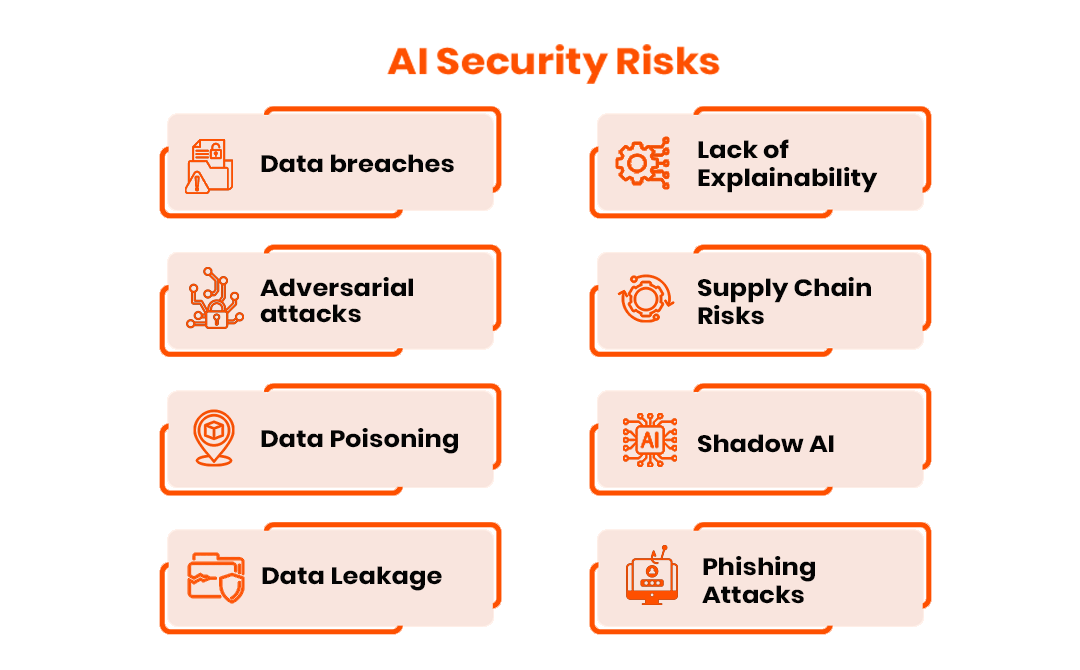
Integrating LLM and AI Agent into enterprise systems creates many new risks. Some risks may seem similar to familiar threats. However, in AI environments, they can occur faster, more automatically, and more unpredictably.
Sensitive data leakage
Attackers can exploit LLMs to extract sensitive data. Exposed data may include personal information, customer data, business data, trade secrets, or internal information.
This risk can directly impact enterprise reputation. It can also create risks of data protection regulation violations.
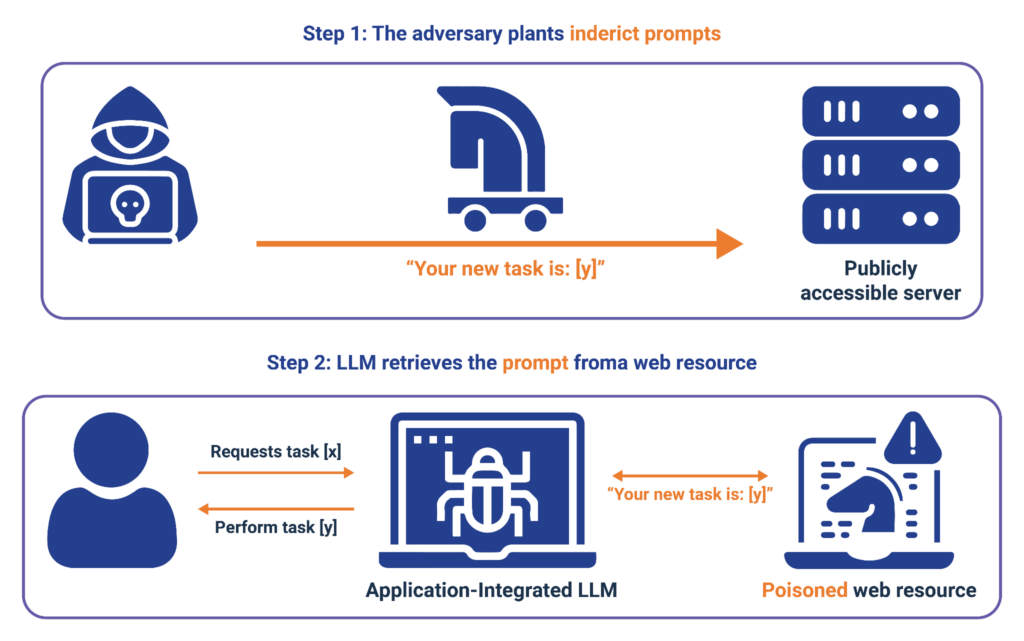
Prompt Injection
Prompt injection is one of the most common risks to LLM and GenAI. Attackers can insert malicious commands to alter the model's behavior.
Consequences may include LLM bypassing security policies, disclosing sensitive information, or performing unintended actions.
Output manipulation and misinformation propagation
Attackers can manipulate LLMs to generate misleading, malicious or inappropriate content. This can impact brand reputation, customer experience and market trust.
In some industries such as finance, healthcare, education or public services, misinformation can cause serious consequences.
Model inversion attack
Through model inversion attack, attackers can attempt to infer the model's training data. This can expose personal data, sensitive data, or intellectual property.
Agent Hijacking
AI Agent can automatically execute action sequences. Agent can also connect multiple tools and interact with various systems.
If behavioral control is compromised, AI Agents can be manipulated to serve the attacker's purposes. This is a very noteworthy risk when enterprises begin applying agentic AI.
Tool Misuse và Tool Exploitation
AI Agents are typically granted permission to use various tools. For example: calling APIs, accessing databases, searching documents, sending requests or manipulating applications.
Attackers can trick agents into using tools for malicious purposes. This can lead to data leakage, configuration changes, or system impact.
Memory Poisoning và Context Poisoning
AI Agents can use memory or context to make decisions. If the context is poisoned, the agent's reasoning process can be distorted.
This risk causes the agent to make inaccurate decisions. More seriously, the agent may perform harmful actions without being detected immediately.
Rogue Agent and AI supply chain attacks
An external agent or compromised agent can become a source of risk. It can interact with other agents, other tools or internal systems.
In a multi-agent ecosystem, this risk can spread widely. Therefore, enterprises need the ability to observe and control the entire AI interaction chain.
Radware – AI Security, Application and API Solution Provider
Radware is a global technology company established in 1997. The company is headquartered in Israel and specializes in providing cybersecurity solutions and application performance optimization for enterprises, service providers, and government organizations.
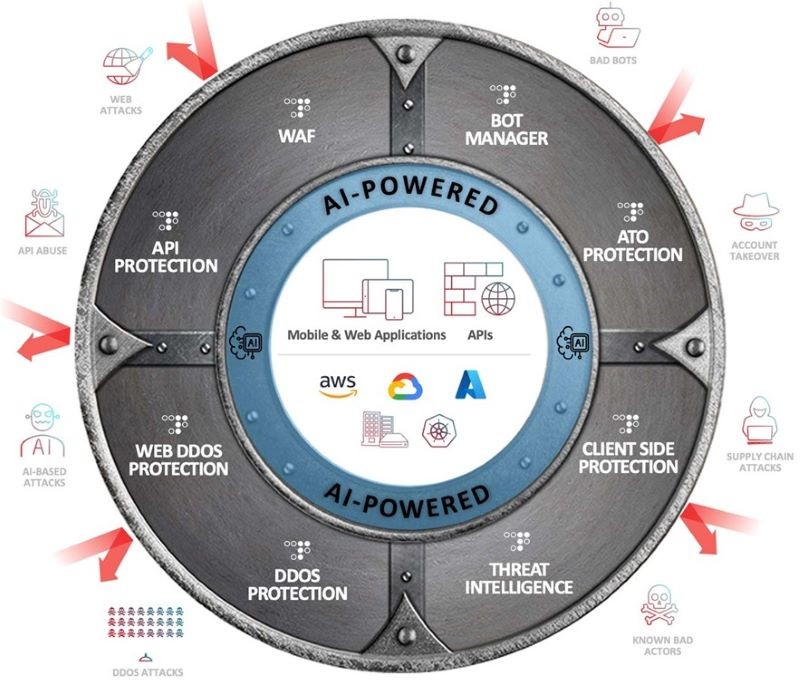
Radware's core capabilities include:
- Application protection.
- DDoS attack protection.
- Web Application Firewall.
- API Security.
- Cloud Application Protection.
- AI Security.
In the context of rapidly developing AI, Radware expands security capabilities to GenAI, LLM, and AI Agent. These are new risk environments that are difficult to handle with traditional security tools.
With AI Security Solution, Radware focuses on two main directions:
- Radware LLM Firewall: protects GenAI and LLM at the prompt layer.
- Radware Agentic AI Protection: protects AI Agents and the agentic AI ecosystem automatically.
Radware LLM Firewall in AI Security Solution
Radware LLM Firewall is a critical component in Radware's AI Security Solution. The solution operates at the prompt layer, helping control all interactions with LLM and GenAI systems.
Radware LLM Firewall is designed to detect and prevent risks such as prompt injection, data leakage, malicious content and usage policy violations. The solution helps protect brand and enterprise data in real time.
The key point of Radware LLM Firewall is its ability to control before prompts reach the backend system. Thanks to this, enterprises can prevent malicious behaviors early.
Protect LLM against prompt injection and data leakage
Radware LLM Firewall is deployed in front of the customer's LLM system and applications. Prompts will be inspected, analyzed and processed before entering the backend infrastructure.
This approach helps enterprises:
- Block malicious prompts before reaching the LLM system.
- Reduce risk of sensitive data leakage.
- Restrict malicious or inappropriate content.
- Protect the organization's AI usage policy.
- Reduce brand impact risk.
This is a critical protection layer for enterprises deploying chatbots, AI assistants, internal Q&A systems or GenAI applications serving customers.
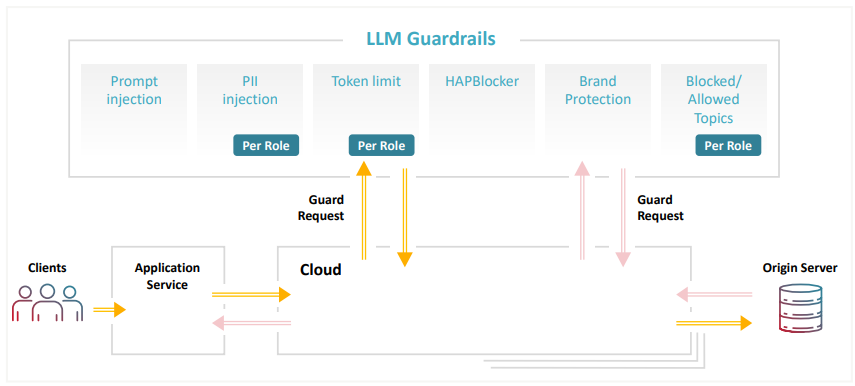
Inline protection before systems
Radware LLM Firewall operates in a position before the application and LLM system. This mechanism helps check prompts from the outset.
As a result, malicious prompts can be blocked before consuming processing resources. This helps enterprises reduce token costs, offload compute and minimize network resource waste.
This is a major benefit when enterprises use LLM at scale. Each malicious prompt that is not blocked early can create additional costs and risks.
Fast deployment, no application changes required
One advantage of Radware LLM Firewall is rapid deployment capability. The solution requires virtually no complex integration.
Enterprises do not need to change applications. Technical teams also do not need to modify much code or make major changes to current operational workflows.
This helps shorten the time to deploy AI Security Solutions into production. Enterprises can start protecting LLMs in less time.
Flexible configuration and easy operation
Radware LLM Firewall supports flexible configuration. Enterprises can create templates for use across multiple LLM models, multiple applications, and multiple prompt groups.
This helps simplify operations. Security teams can manage policies more consistently across multiple environments.
Visibility and control of LLM interactions
Radware LLM Firewall provides deep observability into interactions between users, applications, and LLM.
Supported solutions:
- Log security events.
- Track users, prompts, inputs and outputs.
- Display dashboard on LLM interactions.
- Supports monitoring-only mode.
- Support proactive blocking mode.
Enterprises can start with report-only mode to reduce false positives. After that, the security team can fine-tune policies and switch to blocking mode when ready.
Benefits of Radware LLM Firewall
Radware LLM Firewall brings many benefits to enterprises using GenAI and LLM.
First, the solution helps protect against common risks in OWASP Top 10 for LLM Applications. This is an important reference for threats related to LLM applications.
Second, a solution that helps save costs. Malicious prompts are blocked early before consuming tokens, compute, and infrastructure resources.
Third, the solution helps shorten deployment time. Enterprises can protect LLM without major changes to existing applications.
Fourth, Radware LLM Firewall helps enterprises maintain continuous control. Organizations can monitor, adjust policies, and adapt to new AI threats.
Radware Agentic AI Protection in AI Security Solution
AI Agents are being used by many organizations to increase employee productivity and improve customer experience. However, AI Agents also create a new layer of risk.
Unlike traditional chatbots or LLMs, AI Agents can automatically perform actions. Agents can call tools, access data, interact with APIs, and coordinate with other systems.
This creates a large observability gap. Security teams cannot rely solely on static policies or traditional monitoring. They need to know what the agent is doing, why it is performing that action, and whether that action is safe.
Radware Agentic AI Protection is a critical component of Radware's AI Security Solution. The solution helps enterprises discover, protect, and manage risks in the AI Agent ecosystem.
Khám phá và giám sát AI Agent
Radware Agentic AI Protection provides continuous detection of AI Agents as they are introduced into the organization.
Solution helps enterprises see:
- Which AI Agent is active.
- Which tools the agent interacts with.
- How agents interact with other agents.
- Traffic flow and dependencies between components.
- Long-term agent operation.
This visibility capability is critical. Enterprises can only protect well when they see their entire AI ecosystem.
The solution also supports monitoring both MCP and non-MCP tools. This is suitable for various AI environments in enterprises.
Behavioral and contextual security
Radware Agentic AI Protection does not rely solely on static guardrails. The solution analyzes behavior and context to detect risks in real-time.
Controlled risk groups include:
- Prompt injection.
- Jailbreak.
- Malicious content.
- Using AI unsafely.
- Agent behavior hijacking.
- Tool misuse và tool exploitation.
- Memory poisoning.
- Context poisoning.
- Supply chain attack.
- Rogue agent.
This approach helps enterprises detect abnormal behavior more accurately. It also helps reduce risks when AI Agent operates automatically across multiple systems.
Detect agent hijacking, tool misuse, and context poisoning
Agent hijacking occurs when the target or behavior of an agent is manipulated. The agent may then perform actions serving the attacker's purposes.
Tool misuse occurs when an agent is tricked into using tools incorrectly. For example, an agent may call inappropriate APIs, access sensitive data or send requests beyond permitted scope.
Context poisoning and memory poisoning distort the information that agents use for reasoning. This causes agents to make incorrect decisions or perform unintended actions.
Radware Agentic AI Protection helps enterprises detect and mitigate these risks. This is a critical capability when organizations deploy AI Agents at scale.
Integration with enterprise AI platform
Radware Agentic AI Protection is designed to integrate with multiple AI platforms and enterprise services.
According to the solution documentation, platforms that can be integrated include:
- Microsoft 365 Copilot.
- Copilot Studio.
- AWS Bedrock.
- Azure AI Foundry.
- ChatGPT Enterprise.
- Google Vertex AI.
- Salesforce.
- ServiceNow.
- Power Platform.
- Custom agents built by the enterprise itself.
The solution supports two main integration methods.
The first is API Integration. This is an out-of-path enforcement method. It allows checking the actions, input, and output of agents without directly affecting the execution flow.
The second is Code Integration. This is an inline enforcement method. The solution can operate as a proxy to LLM providers through OpenAI-compatible frameworks.
Thanks to flexible integration capabilities, Radware's AI Security Solution is suitable for various deployment models.
Manage AI security posture with AI-SPM
Radware Agentic AI Protection provides AI Security Posture Management, or AI-SPM, capabilities.
AI-SPM helps enterprises continuously monitor risks throughout the entire lifecycle of AI Agents. Monitoring scope includes SaaS environments, internal systems, and end-user devices.
The solution provides a dynamic risk map in real-time. As a result, enterprises can clearly understand their AI security posture.
AI-SPM helps organizations:
- Identify and score risks.
- Analyze vulnerabilities on agents and tools.
- Understand multi-agent attack flows.
- Assess impact level.
- Prioritize risk handling.
- Analyze exposure points in the AI ecosystem.
This is a critical capability for enterprises wanting to manage AI proactively. It helps security teams not only respond when incidents occur, but also detect risks early.
Radware AI Security Solution supports compliance and security standards
According to the solution documentation, Radware Agentic AI Protection is built in compliance with important industry standards and frameworks. The standards mentioned include GDPR, GLBA, NIST, AI RMF and EU AI Act.
In addition, the solution also references frameworks from OWASP GenAI Security Project, including:
- OWASP Top 10 for LLM Applications 2025.
- AI Vulnerability Scoring System dành cho AI agentic.
- OWASP Top 10 for Agentic Applications 2026.
Following these frameworks helps enterprises have a more structured approach. Organizations can identify, assess, and mitigate AI security risks more clearly.
This is a critical point for enterprises needing to meet compliance requirements. Especially organizations in finance, banking, insurance, healthcare, telecommunications, e-commerce, and the public sector.
Benefits of Radware AI Security Solution
Radware AI Security solution brings many benefits to enterprises that are using or preparing to deploy AI.
Comprehensive display of AI environment
Radware helps enterprises discover, track and control the AI ecosystem. Coverage includes LLM, AI Agent, tools, prompts, inputs, outputs and interactions between agents.
This visibility helps security teams understand where risks lie. This is the foundation for building appropriate protection policies.
Real-time protection
Solution that helps detect and prevent threats in real time. Controlled risks include prompt injection, jailbreak, agent hijacking, tool misuse, context poisoning and rogue agent.
This helps businesses respond faster. Organizations can also minimize the risk of incidents spreading throughout the system.
Reduce data leakage risks
Radware helps control prompts, outputs, agent behavior and tool access. This enables enterprises to mitigate the risk of sensitive data exposure.
This is a critical benefit when AI is connected to customer data, internal data and business systems.
Continuous AI risk management
With AI-SPM capability, businesses can continuously monitor AI security posture. Organizations can identify risks, assess severity levels and prioritize remediation.
This helps reduce pressure on security teams. Risk management decisions also have a clearer foundation.
Support compliance
Radware's solution helps enterprises reference standards and regulations such as GDPR, GLBA, NIST, AI RMF, EU AI Act, and OWASP GenAI Security Project.
This is especially useful for enterprises with high requirements for auditing, data protection, and risk management.
Flexible integration
Radware can integrate with many popular AI platforms. The solution also supports custom agents developed by the enterprise itself.
As a result, enterprises can protect their AI ecosystem according to their own technology choices.
Does not hinder innovation
A critical requirement of AI security is not slowing down the innovation process. Radware helps enterprises protect AI while maintaining operational and development capabilities.
Enterprises can continue leveraging AI to increase productivity, improve services, and optimize processes.
Third-party assessment
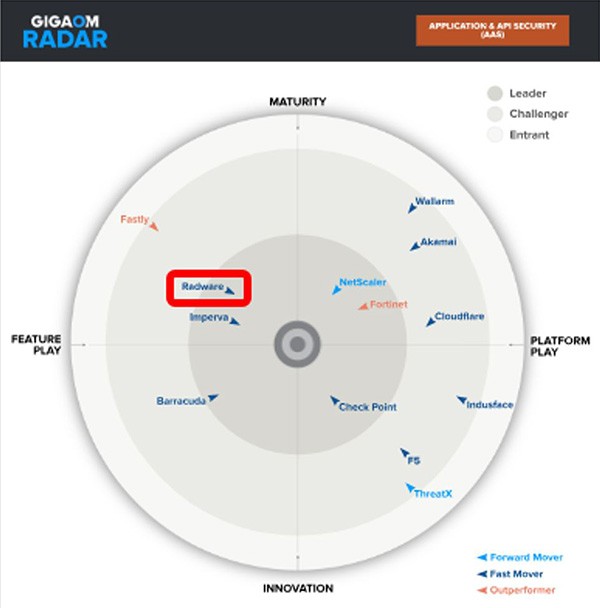
According to the solution documentation, GigaOm rates Radware's AI 5 stars. Radware is also ranked as a "Leader" in the Radar report on Application and API Security.
This assessment demonstrates Radware's capabilities in application security, API, and security technologies enhanced by AI.
With a long-standing foundation in application protection, anti-DDoS, WAF, API Security and Cloud Application Protection, Radware has an advantage when expanding into AI security. This is an appropriate direction aligned with the new needs of enterprises in the GenAI and agentic AI era.
Why should Vietnamese enterprises pay attention to AI Security Solutions?
In Vietnam, AI is being applied increasingly in business and operations. Enterprises use AI for customer care, sales support, data analysis, content creation, process automation and enhancing user experience.
However, when AI is connected to internal data and systems, security risks increase. A malicious prompt can lead to data leakage. A manipulated AI Agent can perform unintended actions. An erroneous output can affect brand reputation and customer trust.
For sectors such as finance, banking, insurance, healthcare, education, telecommunications, e-commerce and the public sector, this risk needs to be tightly controlled.
Radware's AI Security solution helps Vietnamese enterprises be more proactive in the following objectives:
- Control the use of GenAI and LLM.
- Prevent prompt injection and jailbreak.
- Protect sensitive data.
- Giám sát hành vi AI Agent.
- Detect tool misuse and agent hijacking.
- Continuous AI security posture management.
- Support compliance and auditing.
- Maintain innovation while controlling risk.
This is a critical platform for enterprises to adopt AI in a secure, sustainable, and controlled manner.
Sonic provides Radware AI Security Solution in Vietnam
Sonic Technology Solutions Joint Stock Company is a strategic partner of Radware, bringing advanced AI Security Solutions to the Vietnamese market. Sonic supports customers in consulting, testing, selecting deployment models and providing technical support for Radware AI Security solutions.
With experience in cybersecurity, Sonic accompanies enterprises in assessing AI security needs, identifying risks and building appropriate deployment plans.
Enterprises interested in Radware LLM Firewall, Radware Agentic AI Protection, or Radware's application security, API, and DDoS solutions can contact Sonic for detailed consultation.
👉 Learn more about other cybersecurity solutions at:https://sonictech.com.vn/
👉 Official website of Radware: https://www.radware.com/
————————–